
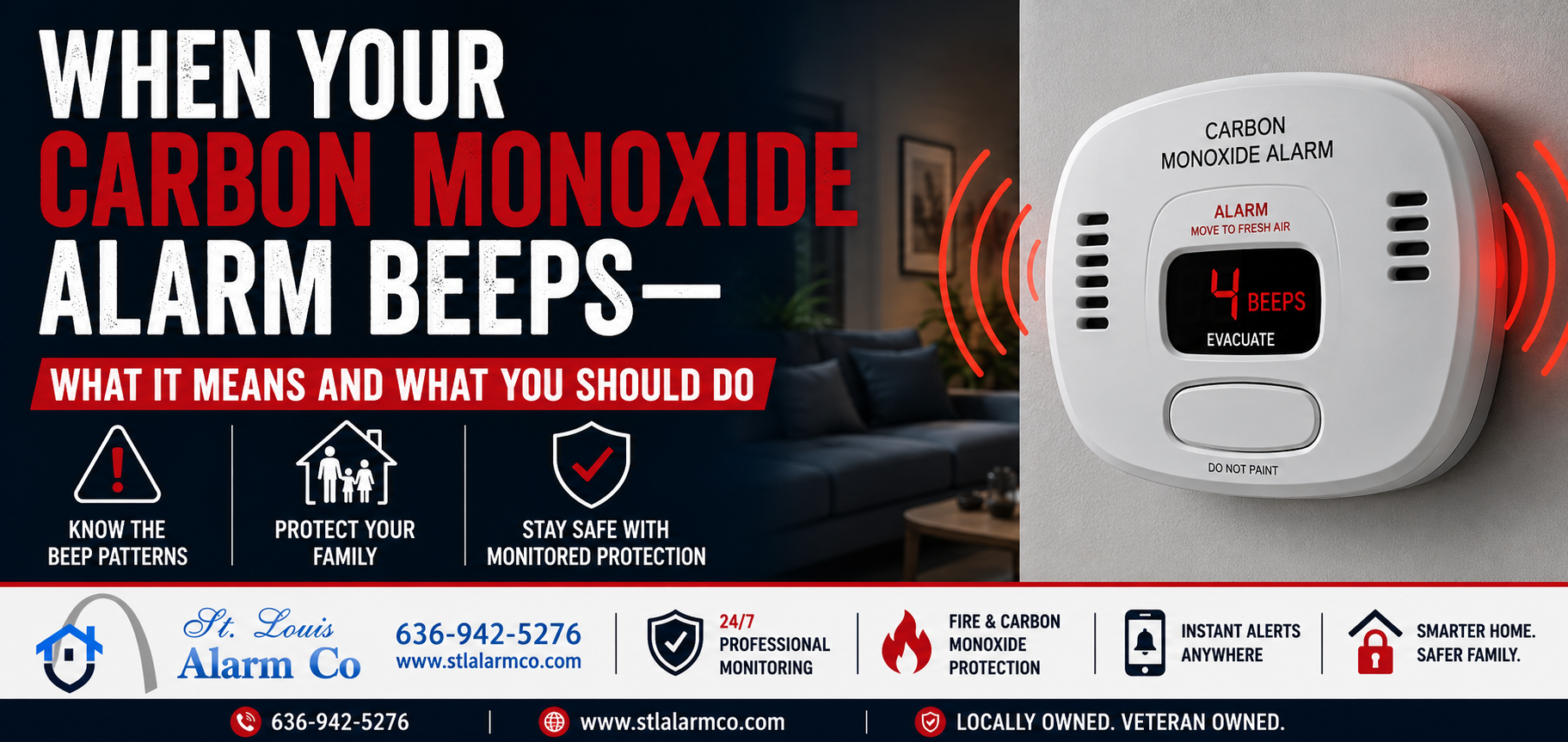
A beeping carbon monoxide (CO) alarm should never be ignored. While some beeps simply indicate a low battery or that the detector has reached the end of its life, other alarm patterns can signal the presence of dangerous levels of carbon monoxide inside your home.
At St. Louis Alarm Company, we want every homeowner to understand the difference between a maintenance alert and a life-threatening emergency.
What Is Carbon Monoxide?
Carbon monoxide is an invisible, odorless, and colorless gas produced whenever fuel burns. Common sources include:
- Gas furnaces
- Water heaters
- Fireplaces
- Gas stoves and ovens
- Portable generators
- Vehicles running inside attached garages
- Gas-powered space heaters
Because you can’t see or smell carbon monoxide, a properly functioning CO alarm is your first line of defense.
Understanding the Different Beeps
Not every beep means the same thing. Here are the most common patterns:
Four Beeps Followed by a Pause
This is an emergency.
Four loud beeps followed by a short pause, repeating continuously, typically means your alarm has detected carbon monoxide.
If this happens:
- Immediately move everyone outdoors into fresh air.
- Call 911 or your local fire department.
- Do not re-enter your home until emergency responders say it is safe.
- If anyone experiences dizziness, headache, nausea, confusion, or weakness, seek medical attention immediately.
Never assume the alarm is malfunctioning.
One Chirp Every Minute
This usually indicates a low battery.
Replace the battery as soon as possible. Even if your detector is hardwired, it likely contains a backup battery that needs periodic replacement.
Five Chirps Every Minute
Many carbon monoxide alarms use five chirps to indicate the detector has reached the end of its service life.
Most CO detectors last between 7 and 10 years depending on the manufacturer. Once the sensor expires, replacing the battery will not solve the problem—the entire detector should be replaced.
Intermittent Beeping After a Power Outage
Following a power outage, some alarms may beep until they are reset.
Consult the manufacturer’s instructions to determine the proper reset procedure.
Common Symptoms of Carbon Monoxide Poisoning
Carbon monoxide poisoning is often mistaken for the flu because symptoms can develop gradually.
Watch for:
- Headaches
- Dizziness
- Fatigue
- Nausea
- Vomiting
- Confusion
- Shortness of breath
Extended exposure can lead to unconsciousness or death.
Preventing Carbon Monoxide Exposure
You can reduce the risk by following these safety tips:
- Have your furnace inspected annually.
- Schedule regular maintenance for gas appliances.
- Never operate a generator inside your home or garage.
- Never leave a vehicle running in an attached garage.
- Ensure fireplace chimneys and vents remain unobstructed.
- Install carbon monoxide alarms on every level of your home and outside sleeping areas.
Upgrade to a Professionally Monitored Carbon Monoxide Alarm
A standard battery-operated detector alerts only those who are home. A professionally monitored carbon monoxide detector provides an added layer of protection.
With a monitored system from St. Louis Alarm Company, your alarm can notify our UL-listed central monitoring station, allowing emergency responders to be dispatched quickly—even if you’re asleep, away from home, or unable to call for help.
Our smart security systems also provide:
- Instant alerts through the Alarm.com mobile app
- Professional 24/7 monitoring
- Fire and carbon monoxide detection
- Smart home integration
- No long-term residential contracts
Protect Your Family with St. Louis Alarm Company
Carbon monoxide is often called the silent killer because it gives no warning until it’s too late. A professionally installed and monitored carbon monoxide detection system can provide peace of mind and help protect what matters most.
If you’re unsure whether your current detectors are functioning properly or you’re interested in upgrading to a professionally monitored security system, St. Louis Alarm Company is here to help.
Call us today at 636-942-5276 for a free consultation, or visit www.stlalarmco.com to learn more about our residential and commercial security solutions.